
What’s the Difference, Really?
English Breakfast Tea is one of the most familiar teas in the Western world. Strong, comforting, and reliable — it’s often enjoyed with milk and sugar as part of a daily routine.
Chinese black tea, on the other hand, is less about routine and more about discovery. Even though both are called “black tea,” they offer very different experiences in the cup.
So what truly sets them apart?
Let’s take a closer look.
1. Same Name, Different Traditions
Although both are labeled as “black tea” in English, they come from different cultural traditions.
In China, black tea is known as Hong Cha, which literally means red tea — named after the reddish color of the brewed liquor.
English Breakfast Tea, however, is not a traditional tea from a single origin. It’s a Western-style blend, created to suit British tastes and breakfast habits.
They share a category name, but their purposes and philosophies are quite different.
2. Chinese Black Tea: Expressive and Leaf-Forward
Chinese black tea is typically made from whole, loose tea leaves, often harvested from specific regions and crafted to express origin.
Common characteristics include:
-
Natural sweetness
-
Notes of honey, fruit, cocoa, or gentle malt
-
A smooth texture with little bitterness
-
A pleasant lingering aftertaste
Famous Chinese black teas such as Keemun, Dian Hong, or Lapsang Souchong all tell different stories — shaped by mountain climate, leaf variety, and traditional craftsmanship.
Chinese black tea is usually enjoyed plain, without milk or sugar, so the natural character of the leaf can shine.

3. English Breakfast Tea: Bold and Comforting
English Breakfast Tea is designed with a clear purpose: to be strong, full-bodied, and energizing, especially when paired with food.
It is typically:
-
A blend of teas from regions such as Assam, Ceylon, or Kenya
-
Broken-leaf or finely cut for strength and consistency
-
Robust, malty, and brisk in flavor
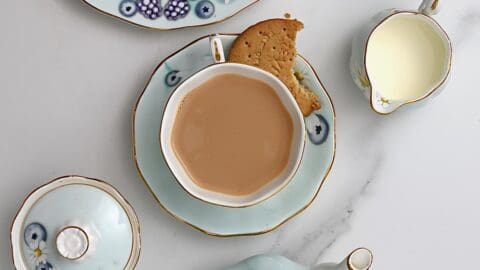
Because of this strength, English Breakfast Tea is commonly enjoyed with milk and sometimes sugar. The additions don’t mask the tea — they’re part of the intended experience.
It’s dependable, familiar, and built for everyday comfort.
4. Blending vs. Single-Origin Character
One key difference lies in how the teas are composed.
English Breakfast Tea focuses on consistency. Blending ensures that each cup tastes similar, regardless of season or harvest variation.
Chinese black tea, by contrast, often highlights single-origin character. Differences between regions, years, and even batches are embraced rather than eliminated.
Instead of asking, “Does this taste the same every time?”
Chinese tea invites you to ask, “What is this tea expressing today?”
5. Brewing Style Makes a Difference
English Breakfast Tea is usually brewed:
-
In a larger teapot or mug
-
For a longer time
-
Once per serving
Chinese black tea is often brewed:
-
In smaller vessels such as a gaiwan or small teapot
-
With shorter infusions
-
Across multiple steepings
The result is not just multiple cups of tea, but a progression of flavor, where each infusion reveals something slightly different.

6. Which One Should You Choose?
The answer depends on what you’re looking for.
Choose English Breakfast Tea if you:
-
Want a strong, bold cup
-
Enjoy tea with milk or sugar
-
Prefer consistency and routine
Choose Chinese black tea if you:
-
Enjoy natural sweetness and layered flavors
-
Prefer drinking tea plain
-
Are curious about origin and craftsmanship
Neither is better than the other — they simply serve different moments.

A Different Kind of Pleasure
English Breakfast Tea is about comfort and familiarity.
Chinese black tea is about attention and exploration.
At Verdant Pavilion, we’re drawn to Chinese black teas that feel honest and expressive — teas that don’t need anything added, and that quietly reward those who slow down and taste carefully.
If you’re already a black tea drinker, Chinese black tea doesn’t replace what you love.
It simply opens another door.